
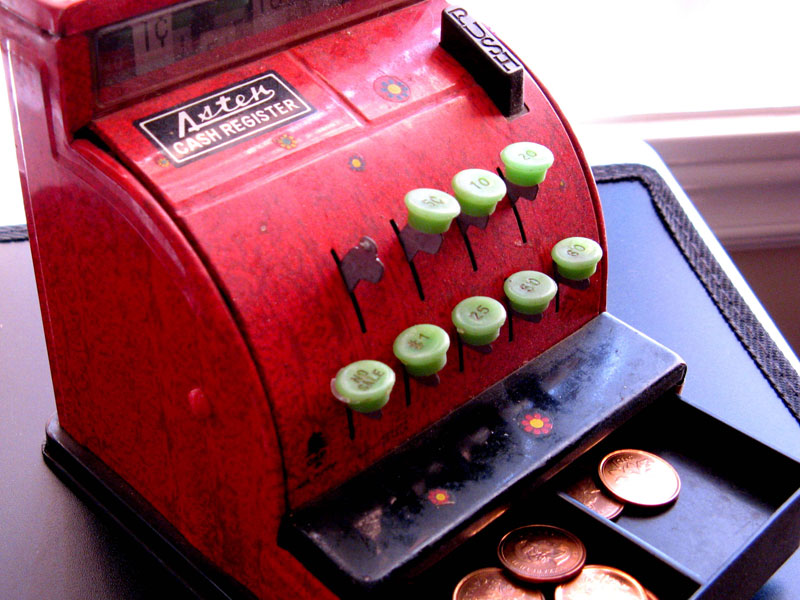
Some remarkable insights when two little girls decided to open a shop to sell their old toys. Some important lessons got learned by them and by me.
Setting up a shop is a game that most children enjoy playing. Here are some remarkable insights when two little girls decided to do it for real. Some important lessons got learned by them and by me.
My children have just gone back to school and the summer holiday felt like went on forever. I am sure that plenty of people know that feeling. I’d like to share something that happened to us one hot summers day.
My daughters are 8 and 10 years old and they decided that they were going to open a shop. At first I thought it was going to be some kind of play game. You know the kind where the shopkeeper has a table full of canned food and packets of cereals and the customer comes in with a handbag full of small coins taken from the piggy bank. In that game they take turns at being shopkeeper and it helps them with their basic maths and other things.
Well, I was wrong. They wanted to open a real shop with real things to sell to real customers for real money. They decided that they were going to open up a stall and sell all those unwanted toys they had accumulated. Things like cuddly toys and the DVD’s they had enjoyed when they were younger. The children decided that they were going to open it up at the entrance to a local children’s adventure playground on one of the warmest and busiest days of August. This turned out to be a smart move in terms of sales as this was obviously where the customers were going to be.
My job was the delivery guy, taking them and their shop to their chosen location. After they had set up their shop I sat on a park bench and read a book and pretty much just let them get on with it. Throughout that morning they earned enough money to keep themselves supplied with ice cream for a couple of weeks. More valuable than the money, however, were the lessons they learned.
Afterwards I asked them what they had learned and this is what they said:
“We put the shop in the wrong place at first so we found a better one.” They realised that they were getting plenty of interest from people entering the playground. They also realised that there were many other people who were walking down the footpath but not turning off into the playground. They reasoned that if they moved the shop 6 feet to the right they would be situated at the fork in the footpaths. In that way they doubled the number of potential customers. I guess this is the classic “Location, Location, Location”.
“Many people liked the things that we did not like.” The girls were constantly surprised by the things that people wanted. In fact at the end of the day most of the things that had been sold were the things that the shopkeepers most wanted to get rid of. I think that this equates to selling the things that the customer wants. I can personally relate to this as when I was a young man I managed some musicians, some bands. I was never very successful. That was because I was making one BIG mistake - I would only manage bands if I liked their music. Whereas, I should have only managed bands that other people liked.
“People bought more stuff when they were coming out of the park. Not many people bought stuff when they were going in.” The children recognised that there were probably 2 reasons for this. Firstly children and their parents were keen to get into the park. After all, that was why they were there. Secondly, people coming out of the park had already walked past the shop once and had a chance to think about it.
“People bought toys when we told them a story about the toy, and that also made it more fun for us.” Just standing there behind the counter was only a small part of the selling process. My two little shopkeepers realised that when you engaged with the customer it was better and more fun. They told them about how good the toy was and perhaps the name of the bear or that this cuddly toy liked having its belly tickled. When they did this it made everybody have more fun and the parents were more likely to buy.
“Expensive things sold just as well as cheap things.” Don’t get me wrong. By adult standards everything was cheap. There were 3 prices: 20p, 50p and £1. I thought this was cheap but the girls thought that £1 was a lot of money for something that they did not actually want any more. Before we started they thought that everything should be sold at the lowest price possible to make people want to buy them. I think that they started to understand that price is not necessarily a barrier when you want something.
“Some people were very rude.”
“Rude people never bought anything.”
Image © Andrea_44 https://www.flickr.com/photos/8431398@N04/3223737302Thank You Andrea for letting us use your lovely photograph.